June 29, 2024

Isaiah 2:17, "And the Lord alone will be exalted in that day"


If Jesus is not the LORD God, how does worshiping Jesus reconcile with Isaiah 2:17, which states the LORD (YHWH) alone will be exalted in that day?

Unitarians reconcile the worship of Jesus with Isaiah 2:17 by emphasizing that any worship of Jesus is ultimately directed towards God. Jesus is honored and exalted because of his unique role and mission given by God, but this does not diminish the supremacy and singular exaltation of God as highlighted in Isaiah.

The Context of Human Pride and Divine Supremacy

Isaiah 2:17 declares, “The haughtiness of man shall be humbled, and the lofty pride of men shall be brought low, and the LORD alone will be exalted in that day.” This verse is often interpreted as emphasizing God's ultimate supremacy over all human pride and arrogance.  The passage highlights the need for humility before God, as all human arrogance and self-exaltation will be brought low in the light of God's ultimate authority. This message serves as a timeless reminder that human achievements and pride are insignificant compared to the divine majesty of God.

Jesus' Humility and Exaltation

Unlike the prideful humans described in Isaiah, Jesus is depicted in the New Testament as the epitome of humility and obedience to God. Philippians 2:5-11 profoundly illustrates this:

Philippians 2:5-11 (AICNT) Have this attitude in yourselves, which was also in Christ Jesus, who, existing in the form of God, did not consider equality with God as something to be seized, but emptied himself, taking the form of a servant, being made in the likeness of men; and being found in appearance as a man, he humbled himself, becoming obedient to the point of death, even death on a cross. Therefore, God highly exalted him and gave him the name that is above every name, so that at the name of Jesus every knee should bow, of those in heaven and on earth and under the earth, and every tongue confess that Jesus Christ is Lord, to the glory of God the Father.

This passage reveals that Jesus’ exaltation is directly linked to his humility. His willingness to humble himself, even to the point of death, stands in stark contrast to the prideful humans described in Isaiah. As a result, God exalted him to the highest place of honor.

Jesus as the Exceptional Humble Servant:

A nuanced understanding recognizes Jesus as an exceptional figure who, unlike prideful humans, fully humbled himself and thus occupies a unique and exalted position in God’s plan.

The phrase “the Lord alone will be exalted” in Isaiah 2:17 can be understood in the context of human pride versus divine humility. While the verse underscores that human pride will be humbled and only God will be exalted, it does not preclude the exceptional case of Jesus, who humbled himself completely. Jesus' exaltation by God is unique because it is not born of human pride but of divine obedience and humility.

Jesus' unique role as the Messiah and his exaltation serve to glorify God. His humility and subsequent exaltation highlight God's plan of salvation and the ultimate triumph of divine grace and humility over human arrogance. Thus, Jesus' exaltation does not compete with or diminish God's supremacy; instead, it magnifies it by showcasing the profound relationship between humility and divine glory.

Jesus as an agent of God

Agency in biblical terms refers to the concept of a person acting on behalf of another, with the authority and power of the one who sent them. In the New Testament, Jesus is often depicted as the ultimate agent of God, carrying out God's will and embodying God's presence on earth. This relationship between Jesus and God can be seen as symbiotic, particularly in the context of Jesus' exaltation.

Jesus’ role as God’s agent means that his exaltation is inherently tied to the exaltation of God. When Jesus is exalted, it reflects back on God’s power and authority, since it is God who has raised Jesus to this high status. Unitarians believe that Jesus, as the Messiah, acts as a mediator and representative of God. While Jesus is highly honored and respected, any worship or reverence directed towards him is ultimately seen as honoring God who sent him. 

Jesus’ role and exaltation are viewed as being granted by God. Philippians 2:9-11 states, “Therefore God exalted him to the highest place and gave him the name that is above every name, that at the name of Jesus every knee should bow, in heaven and on earth and under the earth, and every tongue acknowledge that Jesus Christ is Lord, to the glory of God the Father.” This passage can be interpreted to mean that Jesus’ exalted status is a result of God's will, and the acknowledgment of Jesus serves to glorify God the Father.

Unitarians maintain a clear distinction between God and Jesus. While Jesus is given a place of great honor and is exalted above all other humans, he is still subordinate to God. This is evident in passages like John 14:28, where Jesus says, “The Father is greater than I.” Therefore, the worship given to Jesus is seen as derivative and secondary to the worship of God.

Worshiping Jesus as Part of God's Plan

Worshiping Jesus, therefore, aligns with God's plan as revealed in the New Testament. When believers honor and worship Jesus, they are ultimately glorifying God who exalted Jesus. This worship is an acknowledgment of Jesus' unique role in God's salvific plan and a recognition of his obedience and humility.

John 5:23 supports this understanding: “That all may honor the Son just as they honor the Father. Whoever does not honor the Son does not honor the Father who sent him.” By honoring Jesus, believers are fulfilling the divine will and glorifying God the Father.

 Isaiah 2:17 emphasizes that only God will be exalted. For Unitarians, this does not conflict with Jesus receiving worship, as long as it is understood that Jesus' exaltation is by God’s decree and ultimately serves to glorify God. Jesus’ exaltation and the worship he receives are seen as a testament to God's power and authority in elevating his chosen one.

As the Messiah, Jesus fulfills a unique and divinely appointed role. His life, teachings, and resurrection are central to God's plan for humanity. In this sense, worshiping Jesus is understood as recognizing and accepting his divinely ordained mission and the salvation he brings, which ultimately points back to God.

Rhetorical use of “alone”

The term “alone” can be understood as emphasizing the primary or most significant aspect rather than making an absolute statement. This usage is often rhetorical, aiming to highlight the supremacy or uniqueness of God in comparison to others, without denying the existence or roles of other beings, including Jesus.

In conclusion, while Isaiah 2:17 emphasizes the humbling of human pride and the exaltation of God alone, it does not negate the exceptional case of Jesus Christ. Jesus, who fully humbled himself, is exalted by God and receives worship in a manner that ultimately glorifies God. This understanding harmonizes the themes of divine supremacy and the unique, God-given role of Jesus as the humble and exalted Messiah (agent of God).

For more on the topic of Agency, see https://biblicalagency.com

The Type of Worship Given to Jesus

Three Greek Words for “Worship”


The Greek word latreia (λατρεία) as a noun and latreuō (λατρεύω) as a verb are both related to the concept of service or worship. They most often refer to the act of serving or worshiping in a religious context.

In the New Testament,  latreia and latreuō  usually reserved for the divine worship of God alone, are not used in reference to Jesus Christ. Instead, the term proskynesis (προσκύνησις)  is employed to denote worshipful reverence towards Jesus Christ.

Proskynesis is a term that refers to the act of bowing down or prostrating  oneself as a gesture of deep respect, worship, or submission. It comes from the Greek verb proskyneō (προσκυνέω). Proskynesis is not limited to religious worship. In ancient Greek and Persian cultures, it was also a form of homage or deep respect shown to kings and other high-ranking individuals. In religious contexts, particularly in ancient Greek and later in Christian literature, proskynesis signifies the act of worship offered to gods, rulers, or revered figures as an expression of their divinity, authority, or superiority.

In the Theodotion version of Daniel 7:14, the term douleuō (δουλεύω) is used to describe the service rendered to the Son of Man. The Greek verb douleuō (δουλεύω)  and its future tense form douleusousin (δουλεύσουσιν) primarily mean “to serve” or “to be a slave.” While these terms can be used in religious contexts to describe serving a deity, they do not directly translate to “worship” in the sense of religious adoration or reverence. 

Daniel 7:14 (Theodotion)

“And to him was given dominion and glory and a kingdom, that all peoples, nations, and languages should serve (δουλεύσουσιν, douleusousin) him; his dominion is an everlasting dominion, which shall not pass away, and his kingdom one that shall not be destroyed.”

In this context, douleusousin is used to describe the universal service or allegiance given to the Son of Man, indicating a form of submission and loyalty. Given the context of Daniel 7:14, the term douleusousin carries a strong implication of royal service and submission to the authority of the Son of Man. This service includes elements of worship, given the exalted status of the Son of Man in this prophetic vision.

Use of Proskynesis in Luke -Acts + Paul

 Luke is the more primitive gospel narrative (see https://lukanpriority.com/), which only contains the word proskynesis applied to Jesus once in Luke 24:52. However, this is a textual variant that is not observed in some of the earliest manuscripts, including Codex Baeze, the earliest Old Latin Manuscripts, and the early Sinaitic Syriac manuscript. Thus, it can be argued that in the earliest version of Luke, there are no occurrences of proskynesis in reference to Jesus. Interestingly, Acts 10:25 includes a reference to Peter receiving proskynesis.

Moreover, there are no references in Paul's letters) in which proskynesis is used with explicit reference to Jesus. For Paul, God has highly exalted Jesus and bestowed on him the name above every name, that every knee will bend, and every tongue confesses Jesus Christ is Lord, to the glory of God the Father (Phil 2:8-9). But this is after him being exalted due to his obedience. For those who hold Luke-Acts + Paul as being the core foundational authorities of Apostolic Christianity, it is clear that it was not common practice in the most primitive form of Christianity to refer to Jesus as an object of worship during his life and ministry. Now that Jesus has been made Lord and Christ (Acts 2:36) and has been exalted to the right hand of God (Acts 2:33), Jesus has fully merited honor and servitude as one we should prostrate ourselves to. 

Use of Proskynesis elsewhere in the New Testament


The tendency to use the word proskynesis in reference to Jesus during his ministry is expanded in later Gospel traditions. Mark and Matthew, later revisions to the primitive narrative, have two occurrences and eleven, respectively, of proskynesis applied to Jesus, with the English translation being “worshiped,” “knelt” or “falling on his knees” in the ESV. Hebrews and Revelation, which both point to the fulfillment of God's plan, also include occurrences of proskynesis to Jesus. 

Unitarians understand proskynesis worship that is applied to Jesus in a manner that acknowledges him as God's chosen agent, but not as an object of divine worship in the same sense as God. Jesus is regarded as having been given authority and power by God as an exalted figure above creation. Jesus, being the Messiah (Christ), who fulfills prophecies of a future leader and king in Jewish tradition, is the one chosen by God to rule over and judge the world. 

Is Latreia worship ever applied to Jesus in the Bible?


Nowhere in the New Testament is the term latreia (usually denoting divine worship typically only given to God) used in reference to Christ.

Some trinitarian apologists like to point out that in the Septuagint (LXX) version of Daniel 7:14, latreia is used in reference to the Son of Man. However, they fail to disclose that there are multiple Greek versions of Daniel that predate the first century, and that the version which scholars hold as more accurate does not exhibit the word latreia in Dan 7:14.

In the Theodotion version of Daniel 7:14, the Greek word used is douleusousin (δουλεύσουσιν), which means “they will serve” or “they will worship in a servile manner,” indicating a form of homage or service rendered to the Son of Man. The explicit use of (λατρεία), which specifically denotes worship in a religious or divine sense, is not present in the superior Theodotion version of Daniel. Instead, the emphasis is on the submission and service of all peoples, nations, and languages to the Son of Man's authority and kingdom.

Which Greek word is more appropriate, lateria or douleusousin?


The word being translated from Aramic to greek is  “פלח” (pleach). This word does not necessarily entail religious worship. The term “פלח” (pleach) generally means “to serve” or “to work,” and its context determines whether it refers to religious service or secular labor.

In religious contexts, “pleach” can indeed refer to acts of worship or service to a deity. However, in other contexts, it might simply denote serving or working for someone in a non-religious capacity. Thus, the specific meaning of “pleach” depends on its usage within the broader text or discourse. Therefore, while peach can signify religious worship in certain contexts, it does not inherently or exclusively entail religious worship. Its precise meaning must be interpreted based on the surrounding text and usage. 

When translating a word with a broad range of meanings, it is generally advisable to use a translation that retains the broad range of meanings. This ensures that the translated word can encompass the various contexts in which the original word is used.

In the case of the Aramaic word “pelach” (פלח), which broadly means “to serve” or “to work,” a translation that retains this broad range of meaning would be ideal. In this case, douleusousin (δουλεύσουσιν) is more appropriate because this term is broader and can refer to any form of service, whether secular or religious. It captures the general sense of “serving” without limiting it to worship or religious service.

Yet latreuō is sometimes used loosely in the LXX and elsewhere


There are instances in the Septuagint (LXX) and other early Jewish and Christian texts where latreuō (λατρεύω) is used as a verb in contexts that extend beyond strictly religious worship to include servitude or service to human authorities or entities.

  1. Deuteronomy 28:48 (LXX): You will serve (λατρεύσεις, latreuseis) your enemies whom the Lord will send against you...” This passage indeed uses latreuō to describe serving enemies, implying subjugation or forced service rather than worship in a religious sense.

  2. Judith 3:8 (LXX): “and the nations worshiped (ἐλάτρευσαν, elatreusan) Nebuchadnezzar...”Here, latreuō is used to describe the nations serving or being subjugated to Nebuchadnezzar, again extending the term's use beyond divine worship.

  3. Sibylline Oracles 8.442-445: This passage describes angels “worshiping” the first Adam, which is an unusual context and demonstrates the flexibility of latreuō in certain texts to denote profound respect or honor, though not necessarily in a strictly religious sense.

These examples show that latreuō can indeed be used more broadly to include servitude or honor beyond strictly religious worship. Therefore, latreuō does have a range of meaning that can include both religious and non-religious contexts, although its primary connotation is often religious service. This broader usage can sometimes justify translating pelach as latreuō, especially when the context involves subjugation, honor, or service that could be seen as analogous to worship.


The Theodotion version is superior


This Theodotion version of Daniel (Th-Dan, which reads douleusousin rather than lateria, generally follows the Hebrew Masoretic Text (MT) more closely compared to the Septuagint (LXX) version (OG-Dan). Th-DAN is a more accurate and faithful rendering of the Hebrew/Aramaic text into Greek, addressing perceived shortcomings or discrepancies found in earlier Greek translations.

The Theodition version has been associated with the historical Theodotion, who lived in the early second century CE and was previously thought to have reworked much of the Greek OT. Dan. It is now certain that Th-Dan is not the work of Theodotion, but pertains to an earlier Greek manuscript tradition of the Old Testament that precedes the 1st century CE. 

A date later than the composition of the New Testament texts cannot account for how the NT cites many phrases from Th-Dan. Because of the correspondence between Th-Dan and the New Testament, scholars have concluded that Th-Dan must antedate it. 

The New Testament cites readings that come from OG-Dan as well as Th-Dan. Again, the evidence seems to indicate that the NT writers and the early Christian community employed at least two different Greek forms of Daniel. 

J. Gwynn has argued in “Theodotion,” Dictionary of Christian Biography ((1887) 4.970-79) for a probable theory that in addition to OG-Dan the Jews of pre-Christian times had another Greek form of Daniel. This form was known to the translator of the deuterocanonical Book of Baruch into Greek at around 70 CE, in addition to the NT writers and the earliest Church Fathers such as Clement and Hermas. Gwyunn concludes that this other Pre-Christian Greek form of Daniel became the foundation of the work of the historical Theodotion.

Ziegler (Daniel, 28-29 n. 1.)  had the view that Th-Dan has nothing at all to do with Theodotion but was only superficially reworked by him.

The Theodotion version of the Book of Daniel is often regarded as superior or more reliable compared to the Septuagint (LXX /OG-DAN) version for several reasons:

  1. Faithfulness to Hebrew Text: Theodotion's translation of Daniel is known for its closer adherence to the Hebrew Masoretic Text (MT), which is considered the authoritative Hebrew text of the Old Testament. Theodotion's rendering is seen as more accurate in reflecting the wording and structure of the original Hebrew/Aramaic text of Daniel.

  2. Clarity and Completeness: Theodotion's translation is often clearer and more complete than the LXX version of Daniel. It includes additional material and provides a more coherent narrative flow that aligns closely with the MT, making it easier for scholars and readers to study and understand.

  3. Textual Criticism: In the field of textual criticism, which involves comparing and evaluating different manuscript traditions, Theodotion's version of Daniel provides important insights into the textual history of the Old Testament. It helps scholars reconstruct the original Hebrew/Aramaic text and understand the transmission and interpretation of the biblical text in ancient times.

  4. Wider Acceptance: Early Christian communities and later scholars generally favored Theodotion's version of Daniel due to its perceived fidelity to the original Hebrew and its comprehensive nature. Theodotion's translation became widely accepted and used in the Christian tradition, influencing later biblical manuscripts and translations.

By the 2nd Century, Th-Dan was the principal version of Daniel used by Christian communities.

Justin Martyr (c. 100–165)

Justin Martyr, an early Christian apologist and philosopher, frequently cited and used Theodotion's version of Daniel in his writings. In Dialogue with Trypho, Chapter 80, Justin Martyr discusses Daniel 7:13-14, where he quotes a passage that aligns with Theodotion's wording rather than the Septuagint (LXX). This supports the claim that Justin Martyr considered Theodotion's translation to be more accurate and reliable for his theological arguments concerning Christ and prophecy.

Irenaeus of Lyons (c. 130–202)

Irenaeus, an early Church Father and bishop of Lyons, quotes extensively from Theodotion's Daniel in his works, such as “Against Heresies.” This indicates that he appreciated Theodotion's translation for its clarity and fidelity to the Hebrew text. 

Clement of Alexandria (c. 150–215):
Clement, a Christian theologian and philosopher in Alexandria, also used Theodotion's Daniel in his biblical exegesis and theological writings. In his work “Stromata” (Stromateis), Book 1, Chapter 23, Section 155, Clement of Alexandria cites a passage from Daniel that aligns with Theodotion's version rather than the Septuagint (LXX). He discusses the prophecy of the seventy weeks in Daniel 9, which is a key passage used in theological and exegetical discussions. Clement's citation reflects his preference for Theodotion's translation for its clarity and theological significance.

Tertullian (c. 155–240):

Tertullian, an early Christian theologian and apologist, referenced Theodotion's version of Daniel in his treatises and polemical works. In his work “Against Marcion,” Book 3, Chapter 13, Tertullian discusses Daniel 7:13-14, where he quotes a passage that aligns with Theodotion's wording rather than the Septuagint (LXX). This supports the claim that Tertullian regarded Theodotion's translation as authoritative and relied on it for doctrinal arguments concerning Christ and prophecy.

Origen (c. 184–253):
Origen, a prominent Christian scholar and theologian in Alexandria, used Theodotion's Daniel in his biblical commentaries and textual studies. In his commentary on the book of Daniel, Origen frequently refers to Theodotion's version and compares it with the Septuagint (LXX) and other Greek translations. Oigen's discussions of Daniel often include comparisons between different textual traditions, highlighting his engagement with Theodotion's translation as an authority.

Jerome (c. 347–420):
Jerome, known for his translation of the Bible into Latin (the Vulgate), also favored Theodotion's version of Daniel. Jerome regarded Theodotion's translation as more faithful to the Hebrew Masoretic Text (MT) and superior to the older Greek versions, including the Septuagint (LXX), for its accuracy and completeness.


In Jerome's preface to Daniel in his Latin Vulgate translation, he explicitly discusses the differences between the Greek versions of Daniel and his rationale for preferring Theodotion's version over the Septuagint (LXX):

“Daniel the prophet, whom the Jews named Chaldean, who also among the Greeks has the name Δανιήλ, interpreting Ezekiel, whom they call Ιεζεκιήλ, has been translated into Latin anew, word for word, not according to the Seventy translators, who in this case also have a version not only differing from the original but even differing from the other interpreters... Therefore, as we have said, following the Seventy translators, I have restored their text in such a way that I have given it preference wherever they seem to say something better, to understand more clearly, or to make sense in a more complete manner.” (Jerome, Preface to Daniel in the Vulgate)

In this preface, Jerome discusses his method of translation and explicitly states his preference for Theodotion's version of Daniel over the Septuagint. He criticizes the Septuagint for its departures from the original Hebrew and other Greek translations, indicating that he found Theodotion's translation to be more faithful to the Hebrew Masoretic Text (MT) and superior in terms of accuracy and completeness. 

Jerome's endorsement of Theodotion's Daniel was influential in the Western Church and contributed to the acceptance of Theodotion's translation alongside his own Latin Vulgate translation, which became the standard Bible of the Western Christian Church for many centuries. His scholarly work on biblical texts, including Daniel, emphasized the importance of accurate translation and textual fidelity in biblical studies. 

Again, scholars generally consider the Theodotion version of the Book of Daniel to be more accurate and reliable compared to the Septuagint (LXX) version in this particular book. Theodotion's translation of Daniel is more detailed and closer to the Hebrew Masoretic Text (MT), which is the authoritative Hebrew text of the Old Testament. The LXX version of Daniel, on the other hand, is known to be less consistent and faithful to the original Hebrew, especially in its translations of proper names and theological nuances. 

The more accurate Theodition version of Daniel indicates that the term latreia in the LXX version (OG-DAN) is a mistranslation and that douleusousin is a more appropriate rendering in Greek. 

In conclusion, there is no place in the Bible where latreia is clearly applied to Jesus. Those who appeal to the LXX version of Daniel 7:14 appeal to a contested translation, which scholars and early Christian writers considered an inferior Greek translation of Daniel. 

For more on the contrast between OG-DAN and Th-DAN see https://www.basedtheology.com/2023/06/two-greek-versions-of-daniel-predating.html

Revelation 4 and 5 show the distinction between the worship given to God and that given to Jesus

Revelation 4 and 5, which describes the throne room in heaven, is a perfect reference for distinguishing the workshop given exclusively to God and the type of worship that also applies to the Lamb of God (Jesus).

Revelation 4 describes the worship of God who is sitting on the throne, in verse 8:
“Holy, holy, holy, is the Lord God Almighty,
who was and is and is to come!” (Rev 4:8 ESV)
In verse 10 God is referred to “him who lives forever and ever.” and is further worshiped in verse 11 as being described as the one who created all things:
“Worthy are you, our Lord and God,
to receive glory and honor and power,
for you created all things,
and by your will they existed and were created.” (Rev 4:11 ESV)

Jesus (the Lamb) is not identified in the scene until chapter 5 and is described in Rev 5:6 as standing between the throne and the four living creatures and the elders. This distinguishes him from being God as he is not sitting on the throne but rather in the midst of the throne between God and others. When the Lamb takes the scroll from God who is sitting on the throne, the Lamb is worshiped with the following attribution:


“Worthy are you to take the scroll and to open its seals, for you were slain, and by your blood you ransomed people for God from every tribe and language and people and nation, and you have made them a kingdom and priests to our God, and they shall reign on the earth.” (Rev 5:9-10 ESV)
and:
“Worthy is the Lamb who was slain, to receive power and wealth and wisdom and might and honor and glory and blessing!” (Rev 5:12 ESV)


The Lamb is not being given the attribution of being God who created all things as God is in Chapter 4. Rather, the Lamb is given the attribution that is appropriate to Jesus, as the one who was slain and, in doing so, ransomed people for God, and made them a kingdom. Only God in chapter 4 is given the attribution only appropriate to God as being the creator, the source, and the origin of all things according to his will.

Later, in verse 13 of chapter 5, when “him who sits on the throne” and “the Lamb” are being worshiped together, a blessing is declared for both:
“To him who sits on the throne and to the Lamb
be blessing and honor and glory and might forever and ever!” (Rev 
5:13)

In Summary

  1. Only God who sits on the throne is given the attribution that is appropriate to God alone (the one who created all things and by his will they existed and were created)
  2. Jesus, the Lamb who stands in the midst of the throne (between God and others) is given the attribution that is appropriate to him. Not the attribution of being the creator that only applies to God. 
  3. Both God who sits on the Throne and the Lamb can be worshiped together as deserving of blessing and honor, and glory.   
Thus, we worship God alone as the only True God, and Jesus being distinguished from God, is worshiped not as God, but as the Lamb who ransomed us and made us a kingdom, priests to our God. Here we see the appropriate distinction of how God is worshiped as compared to how Jesus should be worshiped. 


May 26, 2024

Luke 16:9 as a General Principle with Dual Application

Luke 16:9 (AICNT) reads “[And] I say to you, make friends for yourselves from the unrighteous wealth, so that when it fails, they may receive you into the eternal dwellings.” In the context of the preceding parable of the unrighteous manager in Luke 16:1-8, the meaning, although having a worldly application more profoundly, has an eternal one. With Jesus's elaboration later in verses 12-15, the eternal one becomes more clear. It is a worldly or dual application that may not be clear or may trouble some readers.

Regarding the interpretation of verse 9, I believe it is a general principle that can be applied in an earthly frame of reference as well as a heavenly one. The hint about it being a dual application or general principle is the use of the plural pronoun “they.” In addition to the eternal application, the parable suggests there is also an earthly one. Of course, Jesus is emphasizing the eternal. But how it applies to the manager is an earthly one.

This verse can be interpreted to have a dual application:

Earthly Perspective: 

From an earthly viewpoint, Jesus is advising the use of worldly wealth (“mammon of unrighteousness”) in a manner that can cultivate relationships and goodwill. This pragmatic approach suggests that resources should be used wisely to support and help others, thereby building a network of friends who can offer assistance and support in times of need.

Eternal Perspective: 

From an eternal perspective, the verse implies that how one manages worldly wealth has spiritual consequences. By using material resources to aid others, particularly those in need, believers can lay up treasures in heaven. The “everlasting habitations” refer to the eternal reward and welcome in the afterlife. It underscores the principle that generosity and stewardship of earthly possessions can lead to spiritual rewards and eternal fellowship with God.

How can “they” be understood?

Friends Made Through Generosity: 

One interpretation is that “they” refers to the friends made through the wise and generous use of earthly wealth (“mammon of unrighteousness”). The idea is that by helping others with your resources, you build relationships and goodwill.

Heavenly Beings or Saints: 

Another interpretation is that “they” could refer to heavenly beings or saints who are in the presence of God. In this view, the verse suggests that the way you use your resources on earth is observed by heavenly beings, and when you die, they are the ones who will welcome you into eternal life, acknowledging the righteous use of your possessions.

General Concept: 

A broader interpretation is that “they” doesn't refer to specific individuals but to the general concept. It emphasizes the principle that generous actions lead to rewards and security.

What about “Eternal Habitations,” and how can that be understood with the dual application?

Eternal Perspective: 

The primary interpretation is that “everlasting habitations” refers to eternal life and the rewards in heaven. Jesus is emphasizing the importance of using earthly resources wisely and generously, which will lead to spiritual rewards.

Temporal Application: 

While the primary interpretation is eternal, there can be a secondary, more temporal application in the sense that the relationships and goodwill created by generous and righteous use of wealth can have immediate, earthly benefits. These benefits could include support and hospitality from those helped, reflecting the idea of being received into “homes” or “shelters” of friends made through acts of kindness. This can further be elaborated as follows:

1. Temporal Security and Influence: 

In a temporal sense, the homes and resources of the wealthy could be seen as more stable and enduring due to their financial power. Wealth can provide a degree of security and influence that allows for more permanent dwellings and a stable lifestyle. Therefore, “eternal tents” might be understood as metaphorically referring to the lasting impact and security that wealth can provide in this life.

2. Sustained Relationships: 

The idea could extend to the relationships built through the wise and generous use of wealth. By using wealth to build and sustain friendships and alliances, a person might ensure a lasting network of support and hospitality, which could be metaphorically referred to as “eternal tents” in a temporal sense.

3. Reputation and Legacy: 

Wealth can also create a lasting legacy or reputation. Philanthropic actions, charitable contributions, and the establishment of institutions (like hospitals, schools, etc.) funded by wealth can have enduring impacts that outlast the individual's life, contributing to a form of something lasting, although not eternal. 


Jesus did associate with the wealthy

Jesus did dine with Pharisees on several occasions, and He attended feasts where Pharisees were present. Here are a few notable examples:

Dinner at Simon the Pharisee's House (Luke 7:36-50):

Jesus was invited to dine at the house of Simon the Pharisee. During this meal, a sinful woman anointed Jesus' feet with perfume, and Jesus used the occasion to teach about forgiveness and love.

Dinner at a Pharisee's House on the Sabbath (Luke 14:1-24):

Jesus went to eat at the house of a prominent Pharisee on the Sabbath. During this meal, He healed a man suffering from dropsy and taught about humility, hospitality, and the Kingdom of God.

Dinner at Another Pharisee's House (Luke 11:37-54):

A Pharisee invited Jesus to dine with him, and during the meal, Jesus spoke critically about the hypocrisy of the Pharisees and teachers of the law.

These examples indicate that Jesus did dine with Pharisees and attended feasts with them. He had a willingness to eat and converse with them, despite their frequent opposition to his teaching.

John and Hermetic Philosophy, Hellenistic Wisdom Literature, and Apocryphal Books

 This info from GPT-5 outlines the relationship of John with Hermetic philosophy, Hellenistic wisdom literature, and apocryphal books, suggesting that John is contrived and less historically accurate. 

The Gospel of John and Hermetic philosophy 

The relationship between the Gospel of John and Hermetic philosophy is an intriguing topic because both texts share certain thematic and conceptual similarities, yet they arise from different religious and philosophical traditions. Hermetic philosophy, particularly as found in the Corpus Hermeticum, is a collection of writings attributed to Hermes Trismegistus, a syncretic figure combining aspects of the Greek god Hermes and the Egyptian god Thoth. These writings are characterized by their mystical and philosophical content, emphasizing themes such as divine knowledge, the nature of the cosmos, and the ascent of the soul.

Here are some ways in which the Gospel of John might be compared with Hermetic philosophy:

Concept of the Logos

John’s Prologue: The Gospel of John begins with the famous prologue, "In the beginning was the Word (Logos), and the Word was with God, and the Word was God" (John 1:1). This Logos theology presents Jesus as the divine Word, through whom all things were made and who incarnated as Jesus Christ.

Hermetic Texts: Hermetic writings also discuss the Logos, often as a divine principle that orders the cosmos and serves as a mediator between the divine and human realms. The Hermetic understanding of the Logos aligns with the idea of a rational, creative force central to both cosmology and spiritual insight.

Emphasis on Knowledge and Revelation

John’s Theme of Revelation: In John’s Gospel, Jesus is portrayed as the revealer of divine truth, bringing light and knowledge to the world. This theme is evident in statements like "I am the light of the world" (John 8:12) and "You will know the truth, and the truth will set you free" (John 8:32).

Hermetic Knowledge (Gnosis): Hermetic philosophy places a strong emphasis on acquiring gnosis, or divine knowledge, through mystical insight and revelation. The Hermetic texts often depict a journey towards enlightenment and understanding of the divine mysteries.

Dualism and Light-Darkness Imagery

John’s Dualism: The Gospel of John frequently employs dualistic imagery, contrasting light and darkness, truth and falsehood, life and death. This dualism serves to highlight the spiritual battle between good and evil, with Jesus as the light overcoming darkness.

Hermetic Dualism: Hermetic writings also use dualistic imagery, describing the material and spiritual realms, light and darkness, and the process of the soul’s ascent from ignorance to enlightenment. This dualistic framework underpins much of Hermetic cosmology and soteriology.

The Role of the Mediator

Jesus as Mediator: In the Gospel of John, Jesus is the mediator between God and humanity, providing a way for believers to access divine truth and eternal life. He states, "I am the way and the truth and the life. No one comes to the Father except through me" (John 14:6).

Hermetic Mediator: In Hermetic philosophy, the Logos or Nous (Mind) often serves as a mediator, facilitating the soul’s ascent and understanding of divine realities. Hermes Trismegistus himself is depicted as a teacher and mediator of divine wisdom.

Spiritual Rebirth

John’s Concept of Rebirth: In John 3, Jesus discusses the need for spiritual rebirth with Nicodemus, emphasizing that one must be "born again" or "born from above" to see the kingdom of God (John 3:3-7).

Hermetic Rebirth: Hermetic texts similarly speak of spiritual rebirth and regeneration, often describing a transformative process where the soul awakens to its divine origin and potential. 


The Gospel of John and Hellenistic Wisdom Literature

The Gospel of John exhibits several characteristics that align it with Hellenistic wisdom literature, although it is not strictly categorized as such. Hellenistic wisdom literature, which flourished during the Hellenistic period (approximately 323 BC to 31 BC), often includes writings that explore philosophical and theological themes, frequently using poetic and symbolic language. Here are some elements that connect the Gospel of John to Hellenistic wisdom literature:

1. Logos Concept

Philosophical Background: The prologue of John (John 1:1-18) introduces the concept of the Logos, a term that carries significant philosophical weight in Hellenistic thought. In Greek philosophy, particularly in the works of Heraclitus and later Stoic philosophy, the Logos represents the rational principle that orders the cosmos.

Theological Adaptation: John adapts this concept to describe Jesus as the pre-existent Word (Logos) who was with God and was God, and through whom all things were made. This integration of Hellenistic philosophical terminology into a Jewish-Christian context is a hallmark of wisdom literature's approach to bridging different intellectual traditions.

2. Emphasis on Light and Life

Symbolic Language: The Gospel of John frequently uses symbolic language, such as light, life, and darkness, to convey deeper spiritual truths. This style is reminiscent of Hellenistic wisdom literature, which often employs metaphor and allegory to explore complex theological and philosophical ideas.

Dualism: The contrast between light and darkness, good and evil, and life and death in John reflects a dualistic worldview common in Hellenistic thought and wisdom literature.

3. Revelation of Divine Wisdom

Jesus as Wisdom: In Hellenistic wisdom literature, divine wisdom is often personified and described as playing a key role in creation and human affairs (e.g., in the Book of Wisdom and Sirach). The Gospel of John presents Jesus as the incarnation of divine wisdom, who reveals God's nature and purpose to humanity.

Teaching and Revelation: John's portrayal of Jesus includes extended discourses that reveal profound theological insights, much like the teachings found in wisdom literature. These discourses often emphasize knowing God, eternal life, and the relationship between the Father and the Son.

4. Jewish Wisdom Traditions

Integration of Jewish and Hellenistic Elements: The Gospel of John integrates Jewish wisdom traditions with Hellenistic philosophical concepts. For example, the portrayal of Jesus as the Logos parallels the Jewish personification of wisdom (Sophia) in texts like Proverbs 8 and the apocryphal Wisdom of Solomon.

Literary Style: The poetic and reflective style of John’s Gospel, especially in the prologue and the farewell discourses, shares similarities with the literary style of Jewish wisdom literature, which often blends poetry, metaphor, and theological reflection.

5. Influence of Philo of Alexandria

Philo's Logos: Philo of Alexandria, a Hellenistic Jewish philosopher, wrote extensively about the Logos as an intermediary between God and the world. His writings predate the Gospel of John and exhibit a blending of Jewish theological concepts with Hellenistic philosophy. The Gospel of John’s use of the Logos concept suggests a possible influence from Philo’s works or a shared intellectual environment.

The Gospel of John exhibits several characteristics that align it with Hellenistic wisdom literature, including its use of the Logos concept, symbolic language, dualistic themes, and emphasis on divine revelation and wisdom. While it is primarily a theological narrative about the life and teachings of Jesus Christ, it incorporates elements from both Jewish wisdom traditions and Hellenistic philosophical thought, making it a unique and complex work within the New Testament canon.

Apocryphal works are considered sacred by some groups

There are several literary works throughout history that have been created to mimic or masquerade as scripture. These texts often emulate the style, themes, and structure of canonical religious texts but are not recognized as authentic scripture by mainstream religious traditions. Here are a few notable examples:

1. The Gospel of Thomas

Description: The Gospel of Thomas is a collection of 114 sayings attributed to Jesus, discovered near Nag Hammadi, Egypt, in 1945.

Content: Unlike the canonical gospels, it does not have a narrative structure but consists of sayings that are sometimes similar to those found in the New Testament. It presents a more mystical and esoteric interpretation of Jesus' teachings.

Reception: Although some early Christian communities might have considered it significant, it is not recognized as canonical by mainstream Christian denominations.

2. The Book of Mormon

Description: Published by Joseph Smith in 1830, the Book of Mormon is considered scripture by members of the Church of Jesus Christ of Latter-day Saints (LDS Church).

Content: It claims to be a record of ancient prophets who lived on the American continent, with themes and narratives that align with biblical style and Christian doctrine.

Reception: While considered scripture by the LDS Church, it is viewed by mainstream Christianity as a 19th-century work that does not hold the same canonical status as the Bible.

3. The Kebra Nagast

Description: The Kebra Nagast ("The Glory of Kings") is an Ethiopian national epic written in the 14th century.

Content: It narrates the history of the Ethiopian royal family and connects it to the biblical lineage of Solomon and the Queen of Sheba. It presents themes and narratives that align closely with those found in the Old Testament.

Reception: While not considered scripture by mainstream Christianity, it holds significant religious and historical importance in Ethiopian Orthodox Christianity.

4. The Aquarian Gospel of Jesus the Christ

Description: Written by Levi H. Dowling and published in 1908, this text claims to reveal the lost years of Jesus' life.

Content: It combines elements of Christian theology with esoteric and New Age philosophies, presenting an account of Jesus' travels and teachings outside the traditional biblical narrative.

Reception: It is generally considered a New Age spiritual text rather than authentic scripture by mainstream Christian denominations.

5. The Gospel of Barnabas

Description: An apocryphal gospel that claims to have been written by Barnabas, one of the apostles of Jesus.

Content: It presents an account of Jesus' life and teachings that significantly diverges from the canonical gospels, including the claim that Jesus was not crucified but was instead taken up to heaven.

Reception: It is not recognized as authentic scripture by any major Christian denomination and is considered a pseudepigraphal work.

6. The Urantia Book

Description: Published in 1955, The Urantia Book is a comprehensive text that claims to offer an expanded account of the universe, life on earth, and the teachings of Jesus.

Content: It combines science, philosophy, and religion, presenting a cosmology that includes an intricate account of the life and teachings of Jesus, often referred to as "The Life and Teachings of Jesus" section.

Reception: It is considered a work of speculative theology and philosophy, not scripture, by mainstream religious traditions.


These examples demonstrate that various texts have been created to emulate or expand upon the style and themes of canonical scripture. While some of these works are considered sacred by certain groups, they are generally viewed as pseudepigraphal or apocryphal by mainstream religious traditions. The line between scripture and literary work can often blur, especially when texts attempt to present themselves with the same authority and spiritual significance as recognized sacred texts.

Indications that suggest the Gospel of John might be contrived and less historically accurate

Here are some indications and arguments that suggest the Gospel of John might be considered contrived or less historically accurate:

1. Late Composition

Dating: The Gospel of John is generally dated to the late first century, around 90-100 AD. This later date compared to the Synoptic Gospels (Matthew, Mark, and Luke) has led some scholars to question its historical accuracy, suggesting it may have been influenced by theological developments within the early Christian community.

2. Theological Agenda

High Christology: John's Gospel presents a very high view of Jesus as the pre-existent Word (Logos) who became flesh. This theological perspective is more developed than in the Synoptic Gospels, leading some to argue that John's primary aim was theological rather than historical.

Symbolic Language: The use of symbolic and metaphorical language, such as Jesus' "I am" statements ("I am the bread of life," "I am the light of the world"), suggests a more interpretative and theological approach rather than a straightforward historical narrative.

3. Unique Content and Style

Differences from Synoptics: The Gospel of John contains many stories and sayings of Jesus that are not found in the Synoptic Gospels. For example, the extended discourses (e.g., the Farewell Discourse in John 13-17) and the inclusion of unique miracles (e.g., the raising of Lazarus) are absent from the Synoptics. This has led some to view John's Gospel as a more independent and possibly less historically grounded account.

Literary Structure: The structured and thematic nature of John's Gospel, with its focus on signs and discourses, suggests a carefully crafted literary work aimed at conveying specific theological messages.

4. Rejection by Some Early Christians

Ebionites and Alogians: Groups such as the Ebionites, who held to a more Jewish-oriented Christianity, and the Alogians, who rejected the Gospel of John. These groups considered its theological developments as divergent from their understanding of Jesus and his teachings.

Marcionites: Marcion of Sinope, who created a distinct Christian canon excluding the Old Testament and certain New Testament writings, did not accept the Gospel of John as authoritative. He and his followers favored Luke and Pauline epistles.

5. Historical Inconsistencies

Chronological Differences: The timeline of events in John differs from the Synoptic Gospels. For example, the timing of the cleansing of the Temple and the chronology of the Passion Week events differ significantly, raising questions about historical accuracy.

Geographical Details: Some geographical details and descriptions in John are debated among scholars, suggesting the possibility of later additions or symbolic interpretations rather than precise historical reporting.

6. Scholarly Analysis

Source Criticism: Scholars have identified potential sources and influences on John's Gospel, such as the hypothetical "Signs Gospel" or other oral traditions. This suggests that the author may have compiled and reinterpreted existing material to serve theological purposes.

Redaction Criticism: The editing and redaction process of John's Gospel is believed to have involved multiple stages, indicating that the final form of the text may reflect theological elaboration over time rather than a single historical account.

Conclusion

Several indications suggest the Gospel of John may be less concerned with historical accuracy compared to the Synoptic Gospels. The later composition date, unique content and style, theological agenda, rejection by some early Christian groups, historical inconsistencies, and scholarly critiques all contribute to the view that John's Gospel might be a more contrived or symbolic work. These factors highlight the complex nature of John's Gospel and the diverse perspectives on its origins and purpose within the broader context of early Christian literature.

For a more detailed analysis of the issues with the Gospel of John see https://issueswithjohn.com

August 1, 2023

Christ is a Typology

1 Cor 10:4 may seem to imply that Jesus preexisted to some. However, in this context, "Christ" is used as a typology, referring to what God has anointed (to provide salvation). This pertains to spiritual food and drink (1 Cor 10:3-4)

In ancient Israel, the rock was what God anointed to provide salvation. (1 Cor 10:4)  Now Jesus is whom God has anointed to provide salvation.

Acts 10:37-38 (ESV)

you yourselves know what happened throughout all Judea, beginning from Galilee after the baptism that John proclaimed: how God anointed Jesus of Nazareth with the Holy Spirit and with power. He went about doing good and healing all who were oppressed by the devil, for God was with him.

Types of Christs were provided by God in the past. Now God has provided a new and better savior (means of salvation), his begotten son, Christ Jesus.

Heb 5:5 (ESV)

So also Christ did not exalt himself to be made a high priest, but was appointed by him who said to him,

“You are my Son, today I have begotten you”;

July 24, 2023

Essence Energy Distinction and the Holy Spirit

What is the Essence - Energy Distinction?

Making this distinction affirms that there are some things that God cannot share and some things God can share: things that are non-communicable and things that are communicable. God cannot share his essential nature or essence (ousia); that is his ontology. Otherwise, we could become God.  But God can share his Holy Spirit, which pertains to the Energies (energeia) of God.

The Essence/Energy Distinction, also known as Palamism or the Palamite distinction, is a theological concept. The main idea is the differentiation between the essence (ousia) and the energies (energeia) of God. This distinction is essential in understanding the way humans can know, interact with, and participate in God and has significant implications for theology and spirituality. 

Essence refers to the divine essence or nature, the very being of God. It is what makes God, God. It is uncreated, eternal, unchangeable, and incomprehensible. This aspect of God is completely transcendent and cannot be truly known or shared with creation due to its absolute otherness. In other words, God's essence is non-communicable.

Energies, on the other hand, refer to divine actions or operations. They are also uncreated and eternal, but unlike the essence, they are immanent and can be experienced by creation. These are the ways that God interacts with the universe, revealing Himself without making His total essence comprehensible. Through these energies, humans can participate in the divine life (theosis or deification). This participation does not mean humans become God in essence, but they are transformed and become “partakers of the divine nature” (2 Peter 1:4) in a relational sense. Hence, God's energies are communicable.

The Greek word Energeia is used eight times in the NT, often translated as energy, and pertains to metaphysical working, operation, or action (BDAG). Energeia as it pertains to God, is synonymous with the operations of the Holy Spirit.

These are the NT occurrences of Energeia as it relates to power of God: Phil 3:21; Col. 1:29, Col 2:12, Eph 1:19, Eph 3:7

Philippians 3:21 (AICNT)
“who will transform the body of our humiliation to be conformed to the body of his glory, according to the working (energeia) by which he is able even to subject all things to himself.”

Colossians 1:29 (AICNT)
“For this I toil, struggling with his energy (energeia) that powerfully works within me.”

Colossians 2:12 (ACINT)

“Having been buried with him in baptism, in which you were also raised with him through faith in the activity (energeia) of God, who raised him from the dead;”

 Ephesians 1:19 (AICNT)
“and what is the surpassing greatness of his power toward us who believe, according to the working (energeia) of the might of his strength,”

 Ephesians 3:7 (AICNT)
“of which I became a servant according to the gift of God's grace given to me according to the working of his power. (energeia)”


Confusing God who is spirit, with the Holy Spirit

The term 'spirit' in Greek has numerous meanings. In all cases, it is to designate something that is non-physical (meta-physical)

People typically confuse God being spirit, with the Holy Spirit. To say God is spirit is simply to affirm that God is not physical (God is metaphysical). But the Holy Spirit has a different nuance in its contextual use throughout the Bible. It always refers to God in his capacity to act or influence; that is his Energeia. For this reason, I believe it is best to understand Holy Spirit as God's controlling influence rather than the essence, nature, or substance of God. 

Although God's essential nature is not shared with us, his Holy Spirit (energeia) is.

For more on understanding what the Holy Spirit is, see https://controllinginfluence.com.

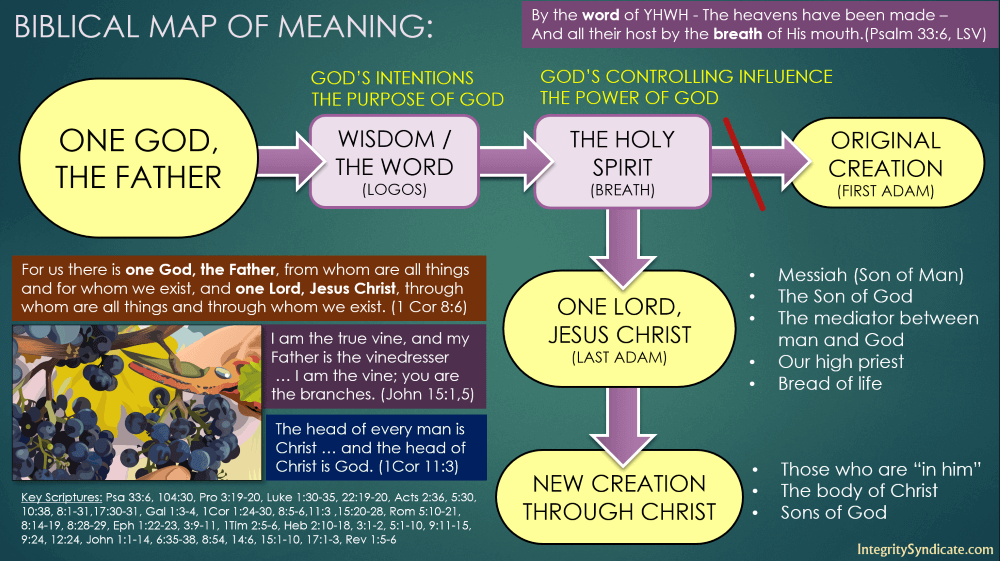
The Father, the Word, and the Holy Spirit as aspects of God.

Rather than saying, the Holy Spirit is the one God and Father. It is more accurate to say that the Holy Spirit is an aspect of the one God and Father. The power of God is transferrable to others and exerts influence over the universe. 

Another aspect of God is his Logos, which pertains to God in his thinking, (the wisdom, understanding, plan, and purposes of God). All things God does are in accordance with his Word (Logos) by the Holy Spirit (breath of God).

Psalms 33:6 (ESV)
By the word of the LORD the heavens were made,
and by the breath of his mouth all their host.


What is the Father, the Word, and the Holy Spirit?

  • The Father is the one God as He is personally identified
  • The Word (Logos) of God is an aspect of God pertaining to God in His capacity to understand, think and plan.
  • The Holy Spirit of God, is an aspect of God pertaining to God in his capacity to act and exert influence over creation – His controlling influence and transmissible power (energeia).

God sharing his glory in reference to the Essence / Energy distinction

In some absolute sense, God cannot, and does not, share his glory. But in some sense, God does share his glory. In another post on Does God Share His Glory? I make a distinction between Essential Glory (the glory of God that cannot be shared with others) and Energetic Glory (the glory of God that can be shared with others). Essential Glory is the glory of God associated with his essence (ousia). Energetic Glory is the glory of God accomplished through the Holy Spirit (energeia). 

https://www.basedtheology.com/2023/06/does-god-share-his-glory.html

The question of God sharing His glory is another application of the Essence-Energy Distinction, that serves to clarify how seemingly contradictory statements in Scripture can be harmonized. 


June 25, 2023

Two Greek Versions of Daniel Predating the 1st Century


Alexander A. Di Lella in a chapter entitled “The textual History of Septuagint-Daniel and Theodotion-Daniel” in The Book of Daniel: Composition and Reception (2002), vol 2, pp. 586-607), presents the scholarship that has demonstrated two major Greek versions of Daniel that predate the 1st Century. This is known in scholarship as OG-Dan and Th-Dan. Critical editions of the Septuagint (LXX) often include both versions.  

For example, the LXX with Critical Apparatus published by German Bible Society contains both versions designated as  “DAN” and “DANT”. “DAN” corresponds to OG-Dan, and “DANT” corresponds to Th-Dan.

OG-Dan (Septuagint Daniel)

OG-Dan, known as “Old Greek” or “Septuagint” Daniel is a primitive Greek translation of Daniel. The date of OG-Dan has generally been assigned to the late second or early first century BCE. OG-Dan is prior to Th-Dan and was likely translated in Alexandria Egypt.

There is scholarly consensus that the OG (Old Greek) is not a homogeneous or uniformly literal translation of the Old Testament but differs from book to book in the accuracy and quality of its results. (Di Lella, p 595) 

There are only two complete witnesses of OG-Dan (manuscript 88 and (c), a literal Syriac translation of the OG that was made in the 7th century). The reason for the scarcity of witnesses to OG-Dan is that early on the Christian church abandoned OG-Dan and replaced it by Th-Dan. Th-Dan triumphed over OG-Dan in 150-200 CE in the Greek church (R. H Pfeiffer, History of New Testament Times, (1949) p. 444)

St. Jerome attested to this replacement in the preface to his translation of Daniel in the Vulgate:

The churches of our Lord Savior do not read the prophet Daniel according to the Seventy Interpreters; they use the edition of Theodotion. But why this happened I do not know. .. This one thing I can affirm - that it [the LXX] differs a great deal from the truth, and with good reason was rejected (Jerome, "Prologus in Danihele Propheta," in R. Weber (ed.) Bibla Sacraiuxta vulgatam versionem (2nd ed., 2 vols. (1975) 2.1231)


Th-Dan (Theodotion Daniel)

Di Lella argues that another Greek translation, now known as Th-Dan, was produced in Palestine or Asia Minor by a Jewish translator during pre-Christian times. It follows that the translator was of the opinion that OG-Dan did not accurately render the Hebrew and Aramaic original, so he translated the work anew with OG-Dan in view. Di Lella further argues that Th-Dan is essentially in its present form (as found in all the Greek MSS, except for 88-Syh and 967) a first-century BCE production that never was reworked by Theodotion. Thus “Th-Dan” is a misnomer. Instead, it is a designation that has been maintained to avoid further confusion. (p 596)

Th-Dan was initially associated with the historical Theodotion, who lived in the early second century CE and was previously thought to have reworked much of the Greek OT. Dan. It is now certain that Th-Dan is not the work of Theodotion, but pertains to an earlier Greek manuscript tradition of the Old Testament that precedes the 1st century CE. 

A date later than the composition of the New Testament texts cannot account for how the NT cites many phrases from Th-Dan. Because of the correspondence between Th-Dan and the New Testament, scholars have concluded that Th-Dan must antedate it. 

The New Testament cites readings that come from OG-Dan as well as Th-Dan. Again, the evidence seems to indicate that the NT writers and the early Christian community employed at least two different Greek forms of Daniel. 

J. Gwynn has argued in “Theodotion,” Dictionary of Christian Biography ((1887) 4.970-79) for a probable theory that in addition to OG-Dan the Jews of pre-Christian times had another Greek form of Daniel. This form was known to the translator of the deuterocanonical Book of Baruch into Greek at around 70 CE, in addition to the NT writers and the earliest Church Fathers such as Clement and Hermas. Gwyunn concludes that this other Pre-Christian Greek form of Daniel became the foundation of the work of the historical Theodotion.

Ziegler (Daniel, 28-29 n. 1.) had the view that Th-Dan has nothing at all to do with Theodotion but was only superficially reworked by him.

DiLella concludes that translators of OG-Dan and Th-Dan were consciously at work on a canonical text. These Greek forms, with the Additions, served as canonical Scripture for the several Greek-speaking Jewish and Christian communities that received (or revised) them. Being Scripture, OG-Dan and Th-Dan deserve the same respect and consideration as the MT. (p. 604)

By the end of the 2nd Century, Th-Dan was the principal version of Daniel used by Christian communities. 

The reading of Daniel 7:13-14

Th-Dan, the authoritative version of Daniel among early Christians, reads in Dan 7:14 douleuo, meaning to serve, to be in subjection to, rather than latreuo, meaning divine worship/service. The variant is theologically significant, as the use of latreuo might seem to suggest divine worship rendered to the Son of Man. 

Daniel 7:13-14 (ESV) 

13 “I saw in the night visions, and behold, with the clouds of heaven there came one like a son of man, and he came to the Ancient of Days and was presented before him. 14 And to him was given dominion and glory and a kingdom, that all peoples, nations, and languages should serve him; his dominion is an everlasting dominion, which shall not pass away, and his kingdom one that shall not be destroyed.

Daniel Theodotion [Th-Dan] 7:13-14 (LXX-APP)

13 ἐθεώρουν ἐν ὁράματι τῆς νυκτὸς καὶ ἰδοὺ μετὰ τῶν νεφελῶν τοῦ οὐρανοῦ ὡς υἱὸς ἀνθρώπου ἐρχόμενος ἦν καὶ ἕως τοῦ παλαιοῦ τῶν ἡμερῶν ἔφθασεν καὶ ἐνώπιον αὐτοῦ προσηνέχθη.
14 καὶ αὐτῷ ἐδόθη ἡ ἀρχὴ καὶ ἡ τιμὴ καὶ ἡ βασιλεία, καὶ πάντες οἱ λαοί, φυλαί, γλῶσσαι αὐτῷ δουλεύσουσιν· ἡ ἐξουσία αὐτοῦ ἐξουσία αἰώνιος, ἥτις οὐ παρελεύσεται, καὶ ἡ βασιλεία αὐτοῦ οὐ διαφθαρήσεται.

GPT4 Translation, Daniel Theodotion [Th-Dan]

13 I was watching in the visions of the night, and behold, with the clouds of heaven, one like a son of man was coming, and he came to the Ancient of Days and was presented before him.

14 And to him was given dominion, and honor, and the kingdom, and all peoples, tribes, and languages will serve him; his dominion is an everlasting dominion, which will not pass away, and his kingdom will not be destroyed.

Daniel [OG-Dan] 7:13-14 (LXX-APP)

13 ἐθεώρουν ἐν ὁράματι τῆς νυκτὸς καὶ ἰδοὺ ἐπὶ τῶν νεφελῶν τοῦ οὐρανοῦ ὡς υἱὸς ἀνθρώπου ἤρχετο, καὶ ὡς παλαιὸς ἡμερῶν παρῆν, καὶ οἱ παρεστηκότες παρῆσαν αὐτῷ.
14 καὶ ἐδόθη αὐτῷ ἐξουσία, καὶ πάντα τὰ ἔθνη τῆς γῆς κατὰ γένη καὶ πᾶσα δόξα αὐτῷ λατρεύουσα· καὶ ἡ ἐξουσία αὐτοῦ ἐξουσία αἰώνιος, ἥτις οὐ μὴ ἀρθῇ, καὶ ἡ βασιλεία αὐτοῦ, ἥτις οὐ μὴ φθαρῇ.

GPT4 Translation, Daniel [OG-Dan]

13 I was watching in the visions of the night, and behold, upon the clouds of heaven, one like a son of man was coming, and as an ancient of days was present, and those who stood by were present with him.

14 And authority was given to him, and all the nations of the earth according to their kind, and all glory was serving him; and his authority is an eternal authority, which shall not be taken away, and his kingdom, which shall not be destroyed. 

The progressive embellishment of the Gospels in reference to Daniel

On https://LukanPriority.com the case is made of progressive embellishment from Luke to Mark to Matthew. Comparing parallels of the three gospels with respect to Daniel references. Luke and Mark reference Th-Dan and Matthew OG-Dan. Matthew is actually making reference to the more unreliable version of Daniel (OG-Dan).